Cycles Approach
Visual Biofeedback Intervention
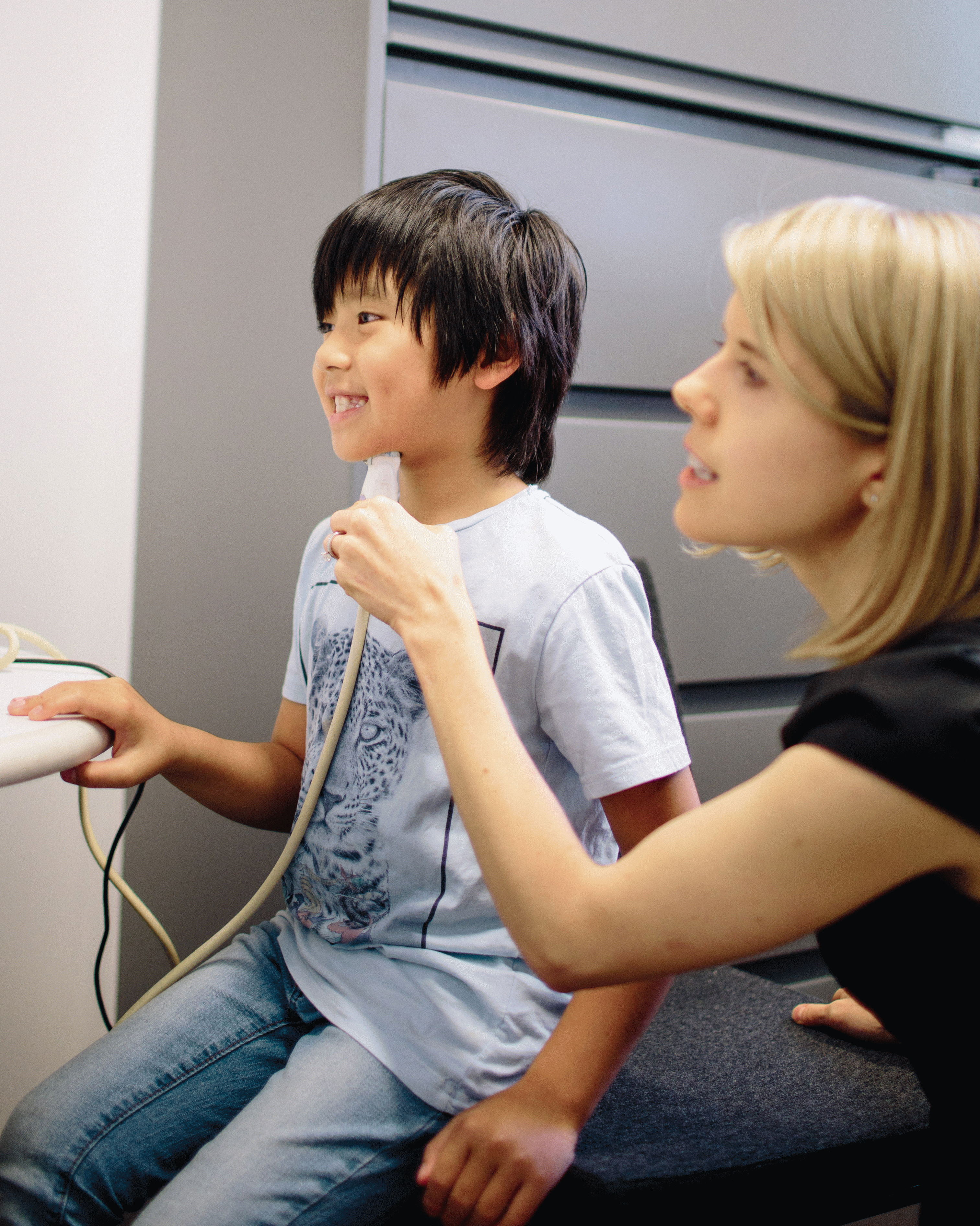
Visual Biofeedback Intervention is an approach for children with issues in articulation. Goal progression follows a hierarchy, from syllable level to conversational level, (syllable, word, phrase, sentence, conversation). The clinician should use spoken instruction, as well as visual instruction to provide observable information for the client. This approach provides information on tongue movement and position, and provides an image for the client to see to aid in their understanding of correct articulation placement(s).
A speech language pathologist is required to implement this approach. It is also important to note that the speech language pathologist should be trained in the technology needed in this intervention. Self-monitoring and understanding of correct placement is required in order for carry-over outside of the session. This approach is meant to provide additional sensory input to the client to aid them in their perception of articulatory issues they have.
Recommended frequency of sessions are twice a week, for approximately 45 minutes. It is also suggested to have about 160 trials per session; however, these variables may be altered depending on the client. This intervention must be provided in a setting where the technology needed is easily accessible.
Resources:
Preston, J. L., hitchcock, E. R., & Leece, M. C. (2020, February). Auditory Perception and Ultrasound Biofeedback Treatment Outcomes for Children with Residual /r/ Distortions: A randomized controlled Trial. Journal of Speech, Language, and Hearing Research, 63, 444-455. doi:https://doi.org/10.1044/2019_JSLHR-19-00060